PHOTO 2.00 Alpha Bandpass Filter 751369821415 H-ALPHA-12NM
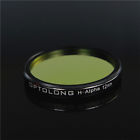
( Brand: Photo ), ( Manufacturer Part Number: 2.00 ), ( Part Type: Filter ), ( UPC: 751369821415 )
Review PHOTO Alpha 12nm Bandpass Filter Alpha-12nm
The H-alpha 12nm bandpass filter with the model number 751369821415 is an essential tool for astrophotographers and astronomers seeking to capture the intricate details of nebulae and other celestial objects. This filter is specifically designed to pass only light within the H-alpha emission line, which is a characteristic wavelength emitted by ionized hydrogen.
The 12nm bandwidth of this filter ensures a narrow and highly selective passband, reducing unwanted light pollution and stray light from other spectral lines. This results in sharper, more detailed images with enhanced contrast and color accuracy. The 2.0mm thick optical glass used in its construction provides excellent durability and resistance to optical damage, making it suitable for use in a variety of telescopes and imaging systems.
The H-alpha 12nm bandpass filter is coated with a multi-layer dielectric coating to minimize internal reflections and reduce scatter, ensuring maximum light transmission and minimal loss. The filter is also anti-reflection coated on both sides to optimize light transmission and reduce ghosting and flaring.
The filter is threaded to fit standard 1.25" telescope eyepieces, making it easy to install and use. It is also available in larger sizes for use with larger telescopes.
In summary, the H-alpha 12nm bandpass filter is an excellent tool for capturing stunning images of nebulae and other celestial objects. Its narrow bandwidth, high light transmission, and durability make it a valuable addition to any astronomer's or astrophotographer's equipment.
Pros of buying a H-alpha 12nm bandpass filter (2.00 nm, part number 751369821415):1. Enhanced H-alpha signal: The 12nm bandpass filter allows for a more focused and intense view of the H-alpha emission line, which is often used to observe solar prominences, nebulae, and other celestial objects.
2. Reduced light pollution: The narrow bandpass filter can help reduce the impact of light pollution, allowing for a clearer view of faint objects in the night sky.
3. Improved contrast: The 12nm bandpass filter can help improve the contrast between the H-alpha emission line and the surrounding light, making it easier to distinguish faint details.
Cons of buying a H-alpha 12nm bandpass filter:1. Limited versatility: The filter is designed specifically for observing H-alpha emission, so it may not be as useful for other wavelengths or types of celestial objects.
2. Higher cost: Compared to broadband filters, narrow bandpass filters like this one tend to be more expensive.
3. Requires additional equipment: To use a narrow bandpass filter, you will need a telescope with a narrowband filter wheel or an H-alpha camera.
Conclusion:The H-alpha 12nm bandpass filter is a useful tool for astronomers looking to enhance their observations of H-alpha emission, such as solar prominences, nebulae, and other celestial objects. Its narrow bandpass allows for a more focused and intense view of the H-alpha emission line, reducing the impact of light pollution and improving contrast. However, it is a specialized filter that may not be as versatile as broader filters, and it requires additional equipment to use. Ultimately, whether or not to purchase this filter will depend on your specific observing needs and budget.
Recommendation:If you are an astronomer with a specific interest in observing H-alpha emission and have the necessary equipment, the H-alpha 12nm bandpass filter could be a valuable addition to your observing setup. However, if you are just starting out in astronomy or have a broader range of interests, you may want to consider a more versatile filter that can be used for a wider range of observing scenarios.
Details:
part #: 200 price
- $118.18
specifications telesfil:
- brand: Photo
- mpn: 2.00
- part type: Filter
- upc: 751369821415
Ratings:
- Great product, used to view eclipse with binoculars. A 10-12-17
- Excellent thank you 02-01-18
- Just as described - quick ship, Thanks so much, would buy from again any time,A 10-10-17
- Great communication. A pleasure to do business with. 01-09-18
- Awesome buyer!! A 01-03-18
Offer telesfil:
- quantity: 2
- Sold: 0
- best offer: false
- Started: February 2, 2018, 9:02 am
- bids: 0
Payments telesfil:
- PayPal
Returns telesfil:
- details: Product must be returned in original packing and packaged the same way it was received. Your return address must be clearly marked on your package. contact Spectrum Telescope The following information must be included with all returns: Your Name Your Complete Address Phone Number Reason for Return Purchase price is fully refunded upon our receiving the package with the refund amount being credited back to your credit card, PayPal, or a business check will bemailed.
- time: 30 Days
- policy: returns accepted
- paid by: Buyer
- type: Money Back
Shipping telesfil:
- handling: 2 days
- type: Calculated
Seller telesfil:
- zipcode: 93010
- city: Camarillo, California
General telesfil:
- sky viewing > telescope filters
- in stock: Yes
- condition: New
Photo 2.00 Is Similar To:
- 07975 Meade Photo-visual Filter Set 709942925029 (12% similar) New sealed package. Meade Photo-visual filter set moon red blue green yellow fits eyepieces, and they are stack able...(February 3rd, 2018)