ORION 24609 Narrowband Ccd Filter Set 1.25
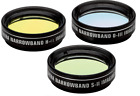
( Brand: Orion ), ( Model: 24609 ), ( Part Type: Filter ), ( Size: 1.25 In ), ( Modified Item: No ), ( Filter Type: Nebular ), ( Compatible Series: Universal )
Review ORION 1.25 Extra narrowband Tri color Ccd Filter Set
The 24609 Orion 1.25" Extra-Narrowband Tri-Color CCD Filter Set is an exceptional tool for astrophotographers looking to capture the subtleties of deep-sky objects in vibrant detail. This set consists of three filters: H-alpha, OIII, and SII, each designed to specifically isolate and enhance the emission of hydrogen, oxygen, and sulfur, respectively.
The H-alpha filter allows you to capture the red glow of nebulae, such as the Orion Nebula, with exceptional clarity and contrast. The OIII filter, on the other hand, is perfect for bringing out the blue-green hues of emission nebulae, like the Horsehead Nebula. Finally, the SII filter helps to reveal the subtler green tones found in nebulae, like the Eagle Nebula.
Each filter in this set is made with high-quality optical glasses and multi-coated to minimize reflection and increase light transmission. They are also extra-narrowband, which means they have a very narrow transmission bandpass, allowing for the maximum isolation of the specific wavelengths of light they are designed to capture.
The 24609 Orion 1.25" Extra-Narrowband Tri-Color CCD Filter Set is a must-have for serious astrophotographers who want to push the boundaries of what their equipment can achieve. With these filters, you'll be able to create stunning images of deep-sky objects that truly bring out their intricate structures and colors.
Pros of buying a 24mm Orion 1.25" Extra-Narrowband Tri-Color CCD Filter Set:1. Enhanced Deep-Sky Imaging: This filter set is specifically designed for deep-sky imaging, allowing you to capture fainter and more distant objects in space.
2. Improved Color Accuracy: The tri-color design of this filter set ensures accurate color representation of the objects you're imaging, especially for emission nebulae.
3. Wide Field of View: The 24mm diameter of the filters allows for a wider field of view, which is beneficial for capturing larger areas of the night sky.
4. Durable Construction: Orion filters are known for their durability and high-quality construction, ensuring that they will last for many observing sessions.
Cons of buying a 24mm Orion 1.25" Extra-Narrowband Tri-Color CCD Filter Set:1. Expensive: These filters can be quite expensive, especially for beginners or those on a tight budget.
2. Requires Specific Equipment: To use these filters, you'll need a CCD camera and a telescope with a 1.25" focal length. If you don't have this equipment, you'll need to invest in it as well.
3. Higher Learning Curve: Using these filters can be more complex than using standard filters, as they require a deeper understanding of astrophotography and image processing.
Conclusion:If you're an experienced astrophotographer looking to enhance your deep-sky imaging, the 24mm Orion 1.25" Extra-Narrowband Tri-Color CCD Filter Set could be a worthwhile investment. However, if you're a beginner or on a tight budget, you might want to consider starting with more basic filters and equipment before moving on to this advanced set.
Recommendation:If you've decided to invest in this filter set, make sure to do your research and choose a reputable dealer. Also, consider investing in some good quality tutorials or courses to help you get the most out of your new filters.
Details:
Images taken with extra-narrowband filters typically look different from those acquired using standard true color GB methods. Shoot high-contrast color ccd images of emission nebula's from light polluted or moonlit skies with these specialized filters filter set includes three dishrag, The extra-narrowband tri-color images, while beautiful, also reveal much about chemical composition of nebula and its various features.
7nm wave length the oxygen-iii line with very high 90 transmission and a band pass of. 4nm wave length the sulfur-ii line in deep red end of visual spectrum with 90 transmission and a band pass also 7nm. 3nm and a full width at half-maximum fem band pass of 7nm these specialized line filters transmit only the specific wave lengths light important in emission nebula's, while blocking out all rest. Includes a protective plastic case for each filter.
The h-alpha filter has a transmission of 90 at hydrogen-alpha line 656. Nose piece or the Orion multiple filter wheel. And the s-ii filter passes light at each is held in an anodized aluminum cell that threaded to fit a standard ccd camera 1.
All three Orion filters are par focal with each other, so refocusing is not needed when switching between in the set. The o-iii filter passes light at extra-narrowband filters: h-alpha, o-iii, and s-ii, all with metal cells these filters transmit specific wave lengths emitted by emission nebula's block other including pollution - so you can capture astronauts in less than ideal conditions each Orion features 90 transmission specified critical wave length a narrow 7nm band pass fem for great results ideal use monochrome star shoot parsec cameras to acquire stunning tri-color vistas of night sky.
And it works even in heavily light polluted or moonlit skies. This is the approach used by astronomers for many of nebula pictures taken with Hubble space telescope. Imaging with extra-narrowband filters is the latest technique used by amateur astronomers for producing striking, high-contrast color ccd astronauts of emission nebula's.
part #: 24609 prices
- $44.95-$99.99
specifications telesfil:
- brand: Orion
- model: 24609
- part type: Filter
- size: 1.25 In
- modified item: No
- filter type: Nebular
- compatible series: Universal
Ratings:
- Great seller! Super fast service! 12-19-17
- Everything is perfect 01-23-17
- thank you fast 01-27-17
- Great 10-28-16
Offer telesfil:
- Sold: 0
- : true
- Started: August 17, 2018, 9:31 am
- quantity: 1
- bids: 0
- min. bid: $250.00
- best offer: false
Seller telesfil:
- zipcode: 44314
- city: Akron, Ohio
Shipping telesfil:
- handling: 1 days
- cost: $0.0
- type: Flat
Returns telesfil:
- policy: no returns
General telesfil:
- condition: Used
- in stock: Yes
- sky viewing > telescope filters
Payments telesfil:
- PayPal
Orion 24609 Is Similar To:
- 007713 Orion Solar Glass Filter (52.6% similar) Hurry only weeks before the eclipse. In great shape aside from a few small scratches around the mounting ring. Orion glass full aperture solar filter...(July 28th, 2017)
- 05064 Orion 8-slot 1.25-inch Filter 759270050641 (45.9% similar) Orion 8-SLOT 25 filters holds filters in same orientation as an eyepiece for optimal performance quickly compare the enhancing effects of up to 8 different filters great visual use and what you see photos is exactly will get brand new, never used shipping 10...(January 12th, 2018)
- 05514 Orion Set Of 4 Filters (55.6% similar) 25 eyepiece. Comes in red, blue, green, and yellow. Submit your best offer. Ideal for viewing of the planets and revealing contrasting surface details. A set of 4 color filters from Orion for...(January 16th, 2017)
- 05516 Orion 1.25 Color Telescope Filter (52.3% similar) Orion advanced color filter kit - made in japan. Each filter comes in a plastic protective box. 25 telescope eyepieces and filter-threaded accessories...(January 6th, 2017)
- 05559 Orion Skyglow Astrophotography Filter (46.4% similar) That?because Orion custom designed the filter to selectively block specific wave lengths of light associated with urban sky glow, letting emitted from deep-sky objects shine through. Because the white light spectrum remains largely intact, color balance of image is not affected, eliminating need for...(August 17th, 2018)
- 05560 Orion Variable Polarizing Filter (50% similar) Orion inch variable polarizing filter perfect condition...(April 8th, 2018)
- 055660 Orion Variable Polarizing Telescope Filter (45.3% similar) Adjust the amount of light transmission from 1 to 40 by rotating eyepiece filter housing. 25IN variable polarizing telescope filter for attenuating the brightness of celestial objects by 60 down to eyepiece equipped with threads. Orion product number filter is brand-new and has never been used or ...(February 28th, 2019)
- 05580 Orion Stargazers Telescope Eyepiece Filter Set (51.3% similar) Includes the sky glow light pollution filter, Orion 13 transmission moon and 2 planetary filters. 25 Orion stargazers filter set is a comprehensive 4 for the best views of all types celestial objects...(June 4th, 2018)
- 05581 Orion Oiii Nebula Narrowband Telescope Eyepiece Filter (37.2% similar) The o-iii provides an even greater contrast boost on some objects than ultra block narrowband telescope filter. Our oxygen-iii telescope filter provides extremely selective filtration to bring out elusive detail in diffuse and planetary nebula's. And for nebula's, every little bit helps. You'll see ...(January 26th, 2019)
- 05599 Orion Mars Telescope Filter (57.6% similar) Box is not perfect but lens in excellent condition I am sure if it was ever used...(October 10th, 2018)
- 05654 Orion Ultrablock Narrowband Filter Telescope In Case Japan (42.2% similar) This is the Orion the bidder pays for return shipping cost. With an ultra block telescope eyepiece filter, emission and planetary nebula's surface from the washed-out background sky seen light-polluted areas. In dark skies, the ultra block also enhances sky presence of a significant number fainter ...(January 16th, 2019)