SVBONY SV240 Narrowband Galaxy Nebula Filter Drawer 792855936961 SV226
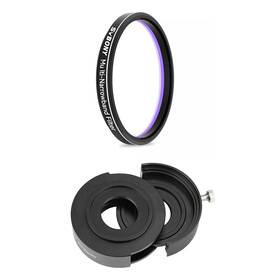
( Brand: Svbony ), ( Manufacturer Part Number: SV240 ), ( Type: Filter ), ( Name: Multi-narrowband Filter ), ( Size: 2-inch ), ( Substrate Thickness: 2mm ), ( Clear Aperture: 44mm ), ( Wavelength Range: 300-1100nm ), ( Fwhm: 24nm 20nm 115nm ), ( Surface Quality: 60/40 ), ( Surface Parallelism: 1/4 ), ( Thread: M48x0.75 ), ( Single Thread: Yes ), ( Net Weight: 12.5g / 0.44oz /0.027lb ), ( Country/region Of Manufacture: China ), ( UPC: 792855936961 )
Review SVBONY Inch Multi narrowband And Nebula Filter Drawer
The SVBony SV240 Multi-Narrowband Galaxy Nebula Filter is a must-have accessory for any serious astrophotographer. This filter is specifically designed to enhance the visibility of emission nebulae, allowing you to capture stunning images of galaxies and nebulae in their full glory.
The SV240 filter is made with high-quality optical glass and features a multi-narrowband design, which means it allows specific wavelengths of light to pass through while blocking out other wavelengths. This results in a sharp, detailed image with enhanced contrast and color. The filter is compatible with SVBony SV240 and other 1.25" telescopes.
The filter comes with a drawer for easy storage and transportation. The drawer is made with durable materials and features a sliding mechanism, making it easy to insert and remove the filter from your telescope. The drawer also has a foam lining to protect the filter from scratches and damage.
The SVBony SV240 Multi-Narrowband Galaxy Nebula Filter is a versatile and powerful tool for astrophotography. With its ability to enhance the visibility of emission nebulae, this filter will allow you to capture amazing images of galaxies and nebulae that you may not have been able to see before. Whether you're a beginner or a seasoned astrophotographer, this filter is a great addition to your telescope kit.
In summary, the SVBony SV240 Multi-Narrowband Galaxy Nebula Filter is a high-quality, multi-narrowband filter designed to enhance the visibility of emission nebulae. It is compatible with SVBony SV240 and other 1.25" telescopes, and comes with a drawer for easy storage and transportation. With its ability to capture stunning images of galaxies and nebulae, this filter is a must-have accessory for any serious astrophotographer.
Pros of buying SVBony 792855936961 SV240 Multi-Narrowband Galaxy Nebula Filter SV226 Drawer:1. Enhances image quality: The multi-narrowband filter allows for better contrast and detail in deep-sky objects, such as galaxies and nebulae, by blocking out unwanted light pollution and allowing only the specific wavelengths required to reveal these objects' faintest details.
2. Compatibility: This filter is compatible with SVBony SV240 and other similar 1.25-inch telescopes, making it a versatile addition to any telescope setup.
3. Durability: Made of high-quality optical glass, the filter is durable and scratch-resistant, ensuring long-lasting performance.
4. Drawer design: The filter comes with a drawer for easy storage and organization, preventing damage and loss.
Cons of buying SVBony 792855936961 SV240 Multi-Narrowband Galaxy Nebula Filter SV226 Drawer:1. Cost: The filter is a significant investment, and some users may find it expensive compared to other filters available in the market.
2. Requires specific telescope and camera setup: To use the filter effectively, it requires a dedicated telescope and camera setup, which may add to the overall cost.
3. Limited use: While the filter is excellent for deep-sky observation, it may not offer much improvement for planetary or lunar observation.
Recommendation:If you are a serious astronomer looking to enhance your deep-sky observation capabilities, the SVBony 792855936961 SV240 Multi-Narrowband Galaxy Nebula Filter SV226 Drawer is an excellent investment. Its high-quality optical glass, durability, and compatibility with many telescopes make it a versatile addition to your telescope setup. However, it is a significant investment, and potential buyers should consider their budget and the specific needs of their telescope and camera setup before making a purchase. Overall, this filter is highly recommended for serious astronomers seeking to unlock the full potential of their telescope for deep-sky observation.
Details:
Considering the high quantum efficiency QE characteristics of latest cameras such as IMX585 and IMX464 in near-infrared region taking into consideration that this is less susceptible to artificial light pollution, filter adds transmission NIR band. Effectively isolate the light pollution band. 5.Passing near-infrared region is for shooting deep sky objects that cannot be imaged with other filters without NIR transmission. Can meet the needs of most galaxies, reflection nebulae, emission nebula, star clusters, etc.
in urban comfortable. 3.Take color images without needing to combine with multiple filters, most useful for One-Shot Color cameras. Features: 1.Can be used to image most deep sky objects, including galaxies, reflection nebulae, emission nebula, and star clusters from a Bottle 1 location 8. Time and labor saving.
4.High transmittance of the main emission lines Ha/OIII/H-Beta in visible region enhances SNR and contrast. The wave length of most galaxies, emission nebula and so on can be captured in a short time. The multiplayer coating design for the remarkable performance in tacking light pollution and high transmittance core wave length . Widely used and high efficiency.
Resistant of BORTLE 8; the multi-narrowband filters can be resistant from Bottle 1 to 8 cities; suitable for almost all urban. Multi-band pass filters; without multiple filters' combination for colorful images; rich color in your lens. Blocking OD4; the ability of this pollution filter for in city to isolate light band allows it be used BORTLE 1-8 urban; use get clearer and higher contrast urban without going remote places. This spectrum design improves the image signal-to-noise ratio and contrast by capturing signal in visible bands NIR regions while maintaining good colour balance being easier to manage post-processing.
2.Multi-Narrowband filter properly designed for both in light polluted, allows imaging bright man-made pollution and moonlit conditions.
part #: sv240 prices
- $52.99-$159.99
specifications telesfil:
- brand: Svbony
- mpn: Sv240
- type: Filter
- name: Multi-narrowband Filter
- size: 2-inch
- substrate thickness: 2mm
- clear aperture: 44mm
- wavelength range: 300-1100nm
- fwhm: 24nm 20nm 115nm
- surface quality: 60/40
- surface parallelism: 1/4
- thread: M48x0.75
- single thread: Yes
- net weight: 12.5g / 0.44oz /0.027lb
- country/region of manufacture: China
- upc: 792855936961
seller telesfil:
- rating: 100.0%
- # reviews: 37695
- city: Rowland height, California
returns telesfil:
- method: Money back
- policy: Returns Accepted
- time: 30 Days
- paid by: Seller
offer telesfil:
- best offers: True
- started: November 22, 2024
- availability: In Stock
- options: Ship-to-home
- sold: 0
- quantity: 8
payments telesfil:
- other
- wallet: Google-pay
- credit card: Mastercard
shipping telesfil:
- cost: $0.00
- class: Economy
- transit: 5-12 Days
- service: UPS Ground Saver
- carrier: UPS
- type: Fixed
general telesfil:
- Binoculars Telescopes > Telescope Parts Accessories > Telescope Filters
- condition: New
Svbony SV240 Is Similar To:
- 4331908694 Svbony Cut Block Filter Multi Coated Infra Red 714559086995 (29.3% similar) No months-long wait from overseas...(August 17th, 2018)
- 714559073797 Svbony Cut Block Filter Infra Red Ccd Camera (31.9% similar) Find its exact match on and the sell an item button. Please wait for some more time. Delivery details processing time:as the. The UV-Ir-cut filter uses very latest coating technology, to deliver finest filtration quality - and lifetime durability. 0GINTERFACE threads: M48. Been holding on to ...(March 14th, 2019)
- 714559092903 Svbony Astro Telescope Eyepiece Moon Filter For Observing (30.6% similar) If you cannot return it, can sell too. 7MM clear aperture. Been holding on to something past its return date. You can sell it online...(March 16th, 2019)
- 714559958957 Svbony Cut Block Filter For Camera Telescope Us (31.3% similar) 25 UV Ir cut block infra-red filter for SLR CDC camera telescope us ship the Svbony is a must all digital imaging with cameras, and modified webcams. 6PACKAGE include:Svbony its easy. If you cannot return it, can sell too. Buying on multiple offers. On mar at 00:23:06 PDT. Find its exact match on ...(March 15th, 2019)
- 714559958995 Svbony Sv Ultra High Contrast Uhc Telescope Filter (33.3% similar) ...(March 15th, 2019)
- 792855937388 Svbony Filter Transmittance For Astronomy Telescope Usship (32.9% similar) Features:filter substrate is fine-optically polished to 1/4 wave...(July 12th, 2019)
- 792855937395 Svbony Filter Narrowband Cuts Light Pollution Us Local (36.4% similar) Features:filter substrate is fine-optically polished to 1/4 wave...(July 17th, 2019)
- 792855935087 Svbony Cut Block Filter Ccd Camera Interference Case (38.2% similar) The UV-Ir-cut filter uses very latest coating technology, to deliver finest filtration quality - and lifetime durability. 25 UV Ir cut filter sturdy plastic case. Main features:the Svbony...(July 20th, 2019)
- Sv115 Svbony Filters Narrowband Cuts Light Pollution For Telescope 792855937357 (31.3% similar) Sky glow o-iii filter narrowband cuts light pollution for astronomy telescope Svbony SV115 18NM 25 o-iii filter narrowband cuts light pollution for astronomy telescope iii is designed nebula observation allowing 18NM band width of centered on a wave length 500NM through, which corresponds to ...(August 5th, 2019)
- 714559073230 Svbony Moon Filter Cpl Kit For Telescope Eyepieceus (27.8% similar) Been holding on to something past its return date. You can sell it online. 25 inch filter threads for filters include most popular color planetary and moon telescope eyepiece filters: 23A bright red 21 orange 12 yellow 56 green 82A blue circular-polarizing. 1GINTERFACE threads: M28. Please wait for ...(August 12th, 2019)
- 714559935408 Svbony Variable Polarizing Filter Metal For Astronomic Telescope (29.3% similar) If you cannot return it, can sell too. Sturdy plastic case included. Been holding on to something past its return date. You can sell it online. Shipping processing time:as the. 25 eyepieces and accessories. 25-INCH variable polarizing filter acts like a dimmer switch for your telescope do not look ...(August 14th, 2019)