GALILEO Individual Set Format Telescope Eyepiece Filters 859773004070 1.25
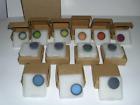
( Brand: Galileo ), ( Part Type: Filter Case ), ( UPC: 859773004070 )
Review GALILEO Individual Cases Set 1.25 Format Telescope Eyepiece Filters
The Individual Set 1.25 Format Telescope Eyepiece Filters (Galileo 859773004070) is a must-have accessory for avid astronomers and stargazers. This set includes 13 high-quality filters designed to enhance your telescope's viewing capabilities, each with a 1.25-inch thread diameter for easy compatibility.
The filters in this set are designed to block specific wavelengths of light, allowing you to see celestial objects in greater detail and contrast. Some filters are designed to enhance color, such as the UHC (Ultraviolet/High Contrast) filter, which helps bring out faint details and enhance the contrast of deep-sky objects. Other filters, like the OIII (Oxygen-III), are designed to enhance emission nebulae, revealing their vibrant colors.
The set also includes a variety of narrowband filters, such as the H-alpha, SII, and SIII, which are specifically designed to enhance emission nebulae in specific wavelengths. These filters can help you see details in nebulae that would otherwise be invisible to the naked eye.
The filters in this set are made of high-quality optical glass and are coated with multi-layer anti-reflective coatings to minimize light loss and maximize image quality. They are also designed to be durable, with scratch-resistant coatings and thick, sturdy frames.
The Individual Set 1.25 Format Telescope Eyepiece Filters (Galileo 859773004070) is a valuable addition to any telescope setup, allowing you to see the night sky in a whole new way. With its wide range of filters, you can explore everything from bright planets to faint nebulae, and unlock the full potential of your telescope.
Pros of buying a 1.25 format telescope eyepiece filters, Galileo (859773004070):1. Compatibility: The 1.25-inch diameter of these filters ensures they will fit most telescopes with a 1.25-inch eyepiece barrel, making them a versatile choice.
2. Improved Contrast: These filters are designed to enhance the contrast in your telescopic observations, making it easier to distinguish between different types of celestial objects.
3. Reduced Glare: They effectively reduce glare and stray light, which can improve your viewing experience and help you see fainter objects more clearly.
4. Protective Layer: The filters have a protective layer to prevent scratching and damage.
5. Cost-Effective: Compared to purchasing multiple individual filters for various purposes, buying a set like this can be more cost-effective.
Cons of buying a 1.25 format telescope eyepiece filters, Galileo (859773004070):1. Limited Functionality: While these filters can enhance contrast and reduce glare, they do not provide the same level of detail as specialized filters, such as narrowband filters for nebulae or lunar filters for observing the moon.
2. Potential Light Loss: Some users have reported a slight loss of light due to the filters, which could limit the brightness of faint objects.
3. Quality Concerns: Some users have reported issues with the quality of the filters, such as poor color balance or inconsistencies between filters in the set.
Conclusion:The Galileo 1.25 format telescope eyepiece filters can be a useful addition to your telescope setup, offering improved contrast and reduced glare at a relatively affordable price. However, if you require more specialized functionality, such as enhanced color separation or reduced light pollution, you may want to consider investing in more targeted filters.
Recommendation:If you are looking for a general-purpose filter set with good value for money, the Galileo 1.25 format telescope eyepiece filters could be a suitable choice. Just be aware that some users have reported inconsistencies in quality, so it may be worth checking reviews before making a purchase. If you are unsure, it may be worth discussing your needs with a knowledgeable telescope retailer.
Details:
Great for increasing contrast in polar ice caps of mars and does a reasonable job at improving atmospheric features on Venus. Presents interesting views of Jupiter and its satellites. Also can be used for enhancing lunar detail. Is useful for increasing mare contrast on mars and improving disc resolution of Uranus Neptune with larger telescopes.
Both sides for stacking. 82a light blue 73 transmission another outstanding performer like the 80a and works well with Jupiter, mars, Saturn moon.s useful for enhancing the cloud belts and polar regions of Saturn. It also lightens red and orange features on mars, while reducing, the transmission of blue green areas.
Includes the following written filter numbers: 8 light yellow 83 transmission used to enhance detail in red and orange features belts of Jupiter. Only this is a wide assortment of filters and all stamped as noted in photos. All 13 inner cartons are shipped in one master carton. 25a red 14 transmission the filter strongly blocks of blue and green wave lengths which results in very sharply defined contrast between cloud formations lighter hue features Jupiter.
Also enhances the blue clouds in martian atmosphere. 25' format all 13 filters arrive packed in their own individual plastic storage case with foam lining threaded on top. Most suitable for Venus given its low light transmission and readily increases contrast of subtle cloud markings. See photo 3.
Has slightly more contrast than the written it performs many of same functions as 21 and 15 but with somewhat. Can be used to enhance lunar detail also light green 53 transmission very good for observing martian polar ice caps and yellow tinted dust storms on the planets surface. Works great with Saturn revealing terrific detail in its belts and polar features.
Darkens the mare regions on mars. Can also be used to increase contrast in lunar features with telescopes of 150mm aperture and larger. Can be useful for lunar observations.
This filter increases the contrast between two. Works very well with mars. Brand new set of 13 telescope glass and metal eyepiece filters 1.
Sharpens the boundaries between these areas on planets surface and can sharpen contrast in belts of Jupiter also enhancing great red spot green 24 transmission strongly rejects blue wave lengths increasing their lighter regions Jupiter's cloud tops. It is the best filter for observations of Venus due to its low light transmission and ability enhance upper atmosphere phenomena. Its pale blue colour enhances low contrast areas and avoids significant reduction of overall light level at the same time.
It works well on martian surface phenomena, like dust storms, and increases contrast in the rings of Saturn. Improving contrast between these planets and the pale blue sky yellow 74 transmission enhances red orange features of Jupiter Saturn, while blocking green wave length s. 23a light red 25 transmission a popular filter for use when observing mars, Jupiter, and Saturn. Suitable also to improve contrast.
80a blue 30 transmission a magnificent all-round filter. Photo 4 all 13 cases are packed in their own individual carton, labeled. Free shipping is for the continental us. Nd96 neutral density 0.
Due to the lower light transmission of this filter, it is best used with telescopes larger than 130mm aperture. Perhaps the best economical filter for studying planetary detail of Jupiter and Saturn. Can be a useful filter for daylight observations of mercury and Venus orange 46 transmission reduces blue green wave length s, thus increasing the contrast between these areas red or yellow. Also increases the contrast of red and blue regions in Jupiter's atmosphere cloud belts.
9 density, 13 transmission the neutral density filter transmits light uniformly across entire visible spectrum making it an excellent tool for glare reduction and studying bright localised lunar surface regions around times of full moon. 38a dark blue 17 transmission very good for use on Jupiter because it strongly rejects red and orange wave lengths in the belts great spot, thus increasing contrast. Enhances contrast of festoons and other disturbances in Jupiter's cloud belts, along with detail the great red spot.
specifications telesfil:
- brand: Galileo
- part type: Filter Case
- upc: 859773004070
Shipping telesfil:
- handling: 1 days
- cost: $0.0
- type: Flat
Seller telesfil:
- city: Homestead, Florida
- zipcode: 33031
General telesfil:
- condition: New
- sky viewing > telescope filters
- in stock: Yes
Offer telesfil:
- Started: February 28, 2017, 10:33 am
- Sold: 0
- bids: 0
- best offer: false
- quantity: 3
Returns telesfil:
- type: Money Back
- paid by: Buyer
- details: SET MUST BE RETURNED INTACT, AS SHIPPED-- ALL INDIVIDUAL CASES, INDIVIDUAL CARTONS AND ORIGINAL MASTER CARTON RETURNED AS NEW. AS WAS SHIPPED. NO PARTIAL RETURNS. THANK YOU, MARY
- policy: returns accepted
- time: 14 Days
Ratings:
- Item work great. 02-21-17
- Nice telescope. Great price. Thanks 02-25-17
- Telescope arrived fast and new! Seller went the extra mile! Highly recommended! 02-22-17
- Excellent !!!! Quick Shipping !!!! Thanks !!!! 02-27-17
- Item arrived as described, thanks 02-25-17
Payments telesfil:
- PayPal