GSO AD116 Planetary Filter 80A
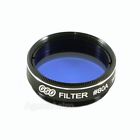
( Brand: Gso ), ( Manufacturer Part Number: AD116 ), ( Part Type: Filter )
Review GSO Color Planetary Filter 80a Medium Blue
The AD116 GSO Planetary Filter 80A is an exceptional tool designed for astrophotography enthusiasts and stargazers alike. This filter, manufactured by GSO, a renowned name in the optics industry, is specifically designed to enhance the view of planets and their intricate details.
The AD116 GSO Planetary Filter 80A is a narrowband filter, with a 80A passband, which means it allows only a specific wavelength of light to pass through, in this case, the H-alpha emission line of hydrogen. This narrow bandwidth provides a high contrast between the planetary features and the surrounding space, resulting in stunningly detailed images.
The filter is made of high-quality optical glass, which ensures minimal color fringing and ghosting, common problems in planetary photography. The glass is coated with a multi-layer, anti-reflection coating, improving light transmission and reducing the risk of internal reflections.
The AD116 GSO Planetary Filter 80A is threaded to fit standard 2" filters, making it compatible with a wide range of telescopes. Its robust construction ensures durability, allowing for years of use.
In summary, the AD116 GSO Planetary Filter 80A is a must-have tool for anyone interested in capturing the beauty and intricacies of planets in astrophotography. Its narrowband passband, high-quality glass, and anti-reflection coating provide exceptional image quality, making it an invaluable addition to any astrophotography setup.
Pros of buying a Adorama 80A Planetary Filter (Ad116 GSO):1. High-quality optics: The filter is made with high-density optical glass, which helps reduce chromatic aberration and provides clear images.
2. Wide compatibility: The Ad116 GSO planetary filter is compatible with various telescopes and eyepieces with a 2-inch diameter.
3. Scratch-resistant coating: The filter has a multi-coating that makes it scratch-resistant and easy to clean.
4. Improves image contrast: The filter can help improve contrast and bring out more detail in planetary images.
5. Durable construction: The filter has a sturdy aluminum frame and adjustable screw-on rings, making it durable and easy to use.
Cons of buying a Adorama 80A Planetary Filter (Ad116 GSO):1. Expensive: The filter is relatively expensive compared to other planetary filters on the market.
2. May require additional adjustments: The filter may require additional adjustments to the focus and alignment of the telescope to achieve optimal results.
3. Limited use: The filter is primarily designed for planetary photography and may not be as useful for other types of astronomical observation.
Conclusion:The Adorama 80A Planetary Filter (Ad116 GSO) is a high-quality filter that can help improve the contrast and detail in planetary images. Its scratch-resistant coating and durable construction make it a reliable investment for serious astronomers and astrophotographers. However, its relatively high price and limited use may make it less appealing to beginners or those with a tight budget. Ultimately, whether or not to purchase the filter depends on your specific needs and preferences as an astronomer or astrophotographer.
Recommendation:If you are a serious astronomer or astrophotographer and are looking for a high-quality planetary filter to improve your images, then the Adorama 80A Planetary Filter (Ad116 GSO) is worth considering. Its scratch-resistant coating, durable construction, and ability to improve contrast and detail make it a valuable tool for capturing stunning planetary images. However, be sure to weigh the pros and cons carefully, as the filter's high price and limited use may not be suitable for everyone.
Details:
Color filters can be very useful for enhancing your views of the moon and planets.
Back to top 4. It enhances the contrast of rills and festoons in Jupiter's cloud belts, as well details great red spot. When used on mercury around twilight, it improves the surface markings, whereas for Venus shows dark shadings in upper clouds.
It is perhaps the best filter for study of detail on Jupiter and Saturn.
It brings out detail in Saturn's belts and polar features.
These are not included in the item price or shipping cost.
Back to top 5.
The filter is very useful on mars in showing high clouds and ice caps, especially during violet clearing. This can often change from batch to according the whims of manufacturer. Gso 2 color planetary filters are manufactured from the purest optical glass and dyed-in-the-mass not simply coated for premium performance.
Each filter cell has a male and female 2 thread m48x0. The 80a medium blue filter is one of most commonly used filters amongst entire spectrum.
The right filter can make all difference between seeing several small craters in floor of claviers on moon or not five six swirls Jupiter's belts inner crepe ring Saturn.
The clear aperture is 44mm and each filter comes in a protective plastic storage case.
Made in Taiwan. This can sometimes take 3-4 weeks to several countries.
Depending on the atmospheric conditions, telescope being used, observers experience, and planet observed or photographed, advantages of color filters can be anywhere from subtle to dramatic. 75 on opposite sides, so multiple filters can be stacked to achieve selective filtration of the visual color spectrum.
You can even use it on double stars - try Antares, for example.
Will combine the shipping weights and show you discounted cost. This can frequently take 4-6 weeks or more for several countries 8 Italy, Argentina, and south Africa Brazil.
It is also a very useful filter for the moon.
The blue filter also brings out gas tails of comets.
part #: ad116 price
- $12.70
specifications telesfil:
- brand: Gso
- mpn: Ad116
- part type: Filter
Payments telesfil:
- PayPal
Seller telesfil:
- zipcode: 90723
- city: Paramount, California
General telesfil:
- condition: New
- in stock: Yes
- sky viewing > telescope filters
Shipping telesfil:
- type: Calculated
- cost: $2.66
- handling: days
Ratings:
- Excellent product, accurate , fast shipping 05-10-18
- solar eyepice zoom. will try it 05-09-18
- got em 05-10-18
- The item arrived quickly in advertised condition. 05-10-18
- Good seller, recommended 05-10-18
Offer telesfil:
- best offer: false
- bids: 0
- Sold: 0
- Started: May 11, 2018, 2:21 pm
- quantity: 5
Returns telesfil:
- details: Please see the Customer Service section of the listing for our return/exchange policy.
- paid by: Buyer
- time: 30 Days
- type: Money Back
- policy: returns accepted
Gso AD116 Is Similar To:
- Ad050 Gso 1.25 Color Planetary (59.5% similar) Depending on the atmospheric conditions, telescope being used, observers experience, and planet observed or photographed, advantages of color filters can be anywhere from subtle to dramatic. Will combine the shipping weights and show you discounted cost. The clear aperture is telescope eyepiece. ...(October 30th, 2017)
- Ad051 Gso 1.25 Color Planetary (62.2% similar) 6 on opposite sides, so multiple filters can be stacked to achieve selective filtration of the visual color spectrum. 6MM and each filter comes in a protective plastic storage case. Each filter cell has a male and female color filters can be very useful for enhancing your views of the moon and ...(November 19th, 2017)
- Ad053 Gso Color Planetary Filter Medium Blue (93.2% similar) The filter is very useful on mars in showing high clouds and ice caps, especially during violet clearing. This can frequently take 4-6 weeks or more for several countries 8 Italy, Argentina, and south Africa Brazil. The clear aperture is 25. Depending on the atmospheric conditions, telescope being ...(July 11th, 2018)
- Ad054 Gso Color Planetary Filter Light Blue (82.8% similar) 6 on opposite sides, so multiple filters can be stacked to achieve selective filtration of the visual color spectrum. 25 color planetary filters are manufactured from the purest optical glass and dyed-in-the-mass not simply coated for premium performance. It also enables viewing of commentary gas ...(April 26th, 2018)
- Ad055 Gso 1.25 Color Planetary (59.5% similar) It darkens maria, lightens orange-hued desert regions and sharpens boundaries of yellow dust clouds. 25 filter thread M28. These are not included in the item price or shipping cost. This can frequently take 4-6 weeks or more for several countries 8 Italy, Argentina, and south Africa Brazil. 25 color...(October 27th, 2017)
- Ad058 Gso 1.25 Color Planetary (59.5% similar) Depending on the atmospheric conditions, telescope being used, observers experience, and planet observed or photographed, advantages of color filters can be anywhere from subtle to dramatic. 6MM and each filter comes in a protective plastic storage case. This can frequently take 4-6 weeks or more ...(October 27th, 2017)
- Ad060 Gso Color Planetary Filter Light Red (76.7% similar) 6 on opposite sides, so multiple filters can be stacked to achieve selective filtration of the visual color spectrum. The filter also increases contrast between mercury and bright blue sky during daylight observations or twilight, when planet is near horizon. Back to top will combine the shipping ...(July 12th, 2018)
- Ad062 Gso 1.25 Color Planetary (62.2% similar) These are not included in the item price or shipping cost. It can be used to reduce sky brightness during daytime observations improve viewing of Venus and reveal surface features on mercury. 6 on opposite sides, so multiple filters can be stacked to achieve selective filtration of the visual color ...(October 27th, 2017)
- Ad067 Gso Ir Blocking Cut Filter For Astronomy Imaging (44.9% similar) It was not the supplier manufacturer of this product. The filter cell is beautifully machined and black-anodized with threads on both sides male one side female other, so you can stack this 2 filters. The tested unit had peak visible light transmission of over this can frequently take 4-6 weeks or ...(May 11th, 2018)
- Ad084 Gso Neutral Density Moon Filter Transmission (42.6% similar) Will combine the shipping weights and show you discounted cost. Neutral density filters are excellent to reduce the overall brightness of an image cut down glare while viewing bright astronomical objects through a telescope. Back to top these are not included in the item price or shipping cost. 25 ...(November 14th, 2018)
- Ad086 Gso 1.25 Polarizing Filter (52.6% similar) This can frequently take 4-6 weeks or more for several countries 8 Italy, Argentina, and south Africa Brazil. 6 on one side and a female thread the other side, so you can stack this filter with made by Gso in Taiwan. A polarize also helps when viewing the moon and planets by reducing brightness ...(October 27th, 2017)