OPTOLONG Q1HB012404Y Hydrogen Beta Narrowband Filter 12NM
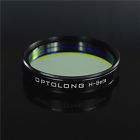
( Brand: Optolong ), ( Manufacturer Part Number: Q1HB012404Y ), ( Part Type: Filter )
Review OPTOLONG Hydrogen Beta Narrowband 12nm Filter
The Optolong H-beta Narrowband 12nm Filter (Q1HB012404Y) is a high-quality astronomical filter specifically designed for astrophotography enthusiasts. This filter is engineered to isolate the H-beta emission line, which is a prominent feature in nebulae, allowing for enhanced contrast and detail in deep-sky images.
The Optolong H-beta filter has a transmission bandwidth of 12nm, which is narrow enough to effectively reduce light pollution and oxygen-oxygen (OIII) and nitrogen-oxygen (OIII) emission lines that can otherwise obscure the H-beta emission. This results in a cleaner and more detailed image of nebulae, particularly H-beta objects like the Orion Nebula and the Veil Nebula.
The filter is made from optical glass with a multi-coated surface to minimize reflection and scattering of light, ensuring maximum transmission and minimal loss of light. The coating also protects the filter from dust, scratches, and other damage, ensuring long-term durability.
The Optolong H-beta filter is compatible with a variety of telescopes and imaging systems, including DSLR cameras, CCD cameras, and CMOS cameras. It is also threaded for easy attachment to your telescope's filter wheel.
In summary, the Optolong H-beta Narrowband 12nm Filter is an essential tool for astrophotographers looking to capture stunning images of nebulae. Its narrow bandwidth, high transmission, and durable construction make it a reliable and effective filter for enhancing your deep-sky imaging.
Pros of buying Optolong Hydrogen Beta Narrowband 12nm Filter:1. Enhances Hydrogen Alpha and Hydrogen Beta Emissions: This filter is specifically designed to block out light pollution and other unwanted wavelengths, allowing only the Hydrogen Alpha and Hydrogen Beta emissions to pass through. This can help increase the contrast and visibility of nebulae and other celestial objects that emit these specific wavelengths.
2. High Transmission Efficiency: The Optolong Hydrogen Beta filter has a high transmission efficiency, allowing up to 95% of the Hydrogen Alpha and Hydrogen Beta emissions to pass through, which can help maximize the signal-to-noise ratio and improve the overall image quality.
3. Durable and Weather Resistant: The Optolong Hydrogen Beta filter is made of high-quality optical glass and is coated with a multi-layer anti-reflection coating. It is also weather resistant, which means it can withstand various weather conditions without losing its performance.
4. Compatibility: The filter is compatible with most telescopes and camera systems, making it a versatile option for both beginner and advanced astrophotographers.
Cons of buying Optolong Hydrogen Beta Narrowband 12nm Filter:1. Limited Use: The filter is only suitable for observing and capturing objects that emit Hydrogen Alpha and Hydrogen Beta emissions, such as nebulae and emission stars. It may not be as useful for observing other types of celestial objects.
2. Cost: The Optolong Hydrogen Beta filter is a premium product and can be quite expensive compared to other filters. The cost may be prohibitive for some astrophotographers.
3. Limited Light Gathering Ability: Due to the specific wavelengths it allows to pass through, the filter may limit the amount of light that can be gathered, which can affect the exposure time and the overall image brightness.
Conclusion:The Optolong Hydrogen Beta 12nm filter is a high-quality, durable, and versatile option for astrophotographers who are interested in capturing images of nebulae and emission stars. Its high transmission efficiency and weather resistance make it a reliable choice, but its limited use and high cost may be a concern for some. If you are primarily interested in observing and capturing objects that emit Hydrogen Alpha and Hydrogen Beta emissions, then the Optolong Hydrogen Beta filter may be a worthwhile investment.
Recommendation:If you are a beginner astrophotographer and are unsure about which filter to choose, it may be worth considering a broadband filter first, which allows a wider range of wavelengths to pass through. This can help you familiarize yourself with the basics of astrophotography and allow you to observe a wider variety of celestial objects. Once you have a better understanding of your needs and preferences, you can consider upgrading to a narrowband filter like the Optolong Hydrogen Beta filter.
Details:
Back to top 5. About Optolong h-beta 12nm filter the Optolong hydrogen-beta narrowband is designed to improve visibility of various deep sky objects.
Non-cementing optical substrate coating. Warning: Optolong filters are not designed for direct solar observation.
Technical specifications both surfaces are fine optically polished, accurate to 1/4 wave length or better, and parallel within 30 seconds arc. It does this by: selectively reducing the transmission of wave lengths light pollutants, specifically those produced by artificial lighting including mercury vapor lamps, both high low pressure sodium lights, and unwanted natural caused neutral oxygen emission in our atmosphere.
This can often change from batch to according the whims of manufacturer. These are not included in the item price or shipping cost.
Other 2 astronomy filter with standard m48x0.
Back to top 4.
Na sodium at 598nm, 589.
Precise and homogeneous coatings ensure high values of desired pass band blocking unwanted offhand.
High quality protective plastic storage case.
This can sometimes take 3-4 weeks to several countries. This can frequently take 4-6 weeks or more for several countries 8 Italy, Argentina, and south Africa Brazil. Allowing 12nm band width of light centered on a wave length 486nm to pass through.
75 male filter thread no female thread, so it cannot be stacked with other filters.
Back to top Optical coating specifications multi layer anti-reflection coated. Ultra-thin filter cell to minimize vignetting clear optical aperture of 45mm.
Spectral curve transmission characteristics 90 at h-beta line 486nm 0.
Precision CBC-machined metal filter cell with sand blasted black anodized finish, anti-reflection treatment, and laser engraving. 2mm thick Scott b270 optical glass substrate material.
Main uses and performance use with a large aperture telescope under clear dark viewing conditions good seeing.
part #: q1hb012404y prices
- $100.00-$349.95
specifications telesfil:
- brand: Optolong
- mpn: Q1hb012404y
- part type: Filter
Offer telesfil:
- best offer: false
- bids: 0
- Sold: 0
- Started: March 11, 2017, 8:38 pm
- quantity: 2
Ratings:
- Great eyepiece! Thanks! 03-11-17
- as listed good service / thank you 03-12-17
- Received on time and as described. Thanks! 03-11-17
- Packaged well, fast shipping, item as described, will do business w/again A 03-10-17
- Fast Shipping, A Seller, Thanks 03-10-17
Shipping telesfil:
- cost: $2.77
- handling: days
- type: Calculated
General telesfil:
- sky viewing > telescope filters
- condition: New
- in stock: Yes
Seller telesfil:
- city: Cerritos, California
- zipcode: 90703
Returns telesfil:
- time: 30 Days
- policy: returns accepted
- details: Please see the Customer Service section of the listing for our return/exchange policy.
- type: Money Back
- paid by: Buyer
Payments telesfil:
- PayPal
Optolong Q1HB012404Y Is Similar To:
- Ol-ms-2in Optolong Moon Skyglow Light Pollution Reduction Filter (33% similar) Back to top will combine the shipping weights and show you discounted cost. This can often change from batch to according the whims of manufacturer. This can sometimes take 3-4 weeks to several countries. About Optolong moon and sky glow filter is designed to darken the background sky by blocking ...(February 4th, 2019)
- Q1cf000403y Optolong Clear Focusing Imaging Filter For Astrophotography (37.9% similar) Shipping Cronus only. En products astronomy-filters other-photo-filter 341-OTHER-PHOTO-FILTER-CLEAR-FOCUSING. Manufacturers...(May 30th, 2018)
- Q1cl000403y-02 Optolong Altair Astro Rebrand Light Pollution Reduction Filter (41% similar) ALTAIR-PREMIUM-2-CLS-CCD-FILTER-UVIR-BLOCK-AR-COATING. Shipping Cronus only. Manufacturers...(May 30th, 2018)
- Q1ha012403y Optolong Hydrogen Alpha Narrowband (87.9% similar) Warning: Optolong filters are not designed for direct solar observation. Hubble look of images can be made by the combination h-alpha, iii-CDC and Sui-CDC images, such as famous pillars creation M16 eagle nebula. Technical specifications both surfaces are fine optically polished, accurate to 1/4 ...(March 23rd, 2017)
- Q1ha012404y Optolong Hydrogen Alpha Narrowband (90.1% similar) 4NM, and 2MM thick Scott B270 optical glass substrate material. These are not included in the item price or shipping cost. High quality protective plastic storage case. Na sodium at 598NM, 589. Warning: Optolong filters are not designed for direct solar observation. Electron-beam gun evaporation ...(March 23rd, 2017)
- Q1hb012403y Optolong Hydrogen Beta Narrowband (97.8% similar) This can frequently take 4-6 weeks or more for several countries 8 Italy, Argentina, and south Africa Brazil. Very high surface quality of or better us military spec mil-o 2MM thick Scott B270 optical glass substrate material. Allowing 12NM band width of light centered on a wave length 486NM to ...(March 22nd, 2017)
- Q1ll000403y Optolong Uv Ir Cut Filter (46.3% similar) Warning: Optolong filters are not designed for direct solar observation. This can frequently take 4-6 weeks or more for several countries 8 Italy, Argentina, and south Africa Brazil. This can sometimes take 3-4 weeks to several countries. Technical specifications both surfaces are fine optically ...(June 29th, 2018)
- Q1lx000404y Optolong Lrgb Imaging Filter (51.8% similar) This can frequently take 4-6 weeks or more for several countries 8 Italy, Argentina, and south Africa Brazil. Precise and homogeneous coatings ensure high values of desired pass band blocking unwanted offhand. About Optolong rugby filter set the Optolong is designed for maximum contrast and with ...(October 30th, 2017)
- Q1mu000403y Optolong Moon Skyglow Light Pollution Reduction Filter (41.4% similar) Shipping Cronus only. Manufacturers. En products astronomy-filters band pass-photo-filter 340-OTHER-PHOTO-FILTER-MOON-SKY-GLOW...(May 31st, 2018)
- Q1mu000404y Optolong Moon Skyglow Light Pollution Reduction Filter (43.2% similar) Optical coating specifications multi layer anti-reflection coated. This can frequently take 4-6 weeks or more for several countries 8 Italy, Argentina, and south Africa Brazil. About Optolong moon and sky glow filter is designed to darken the background sky by blocking light transmission from 589NM ...(May 18th, 2018)
- Q1sii012403y Optolong Sulfur Ii Narrowband Nebula Ccd Filter (59% similar) Allowing 12NM band width of light centered on a wave length 672NM to pass through, which corresponds Sui emission lines. 25 Optolong sulfur ii s-ii narrowband 12NM nebula CDC filter will combine the shipping weights and show you discounted cost. Precise and homogeneous coatings ensure high values ...(June 29th, 2018)