BAADER 2458385 Ir Infrared Filter 1.25 685NM
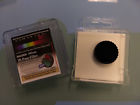
( Brand: Baader ), ( Manufacturer Part Number: 2458385 ), ( Part Type: Filter ), ( Size: Inches ), ( Filter Type: Ultraviolet/infrared )
Review BAADER 1.25 Ir pass 685nm Infrared Filter
The Baader 1.25 IR-Pass 685nm Infrared Filter is a high-quality optical accessory designed for astrophotographers and astronomers seeking to capture deep-sky objects in the infrared spectrum. This filter is specifically engineered to pass infrared light with a wavelength of 685nm, while effectively blocking out visible and shorter wavelength light.
Crafted from Schott B270 glass, this Baader filter is known for its excellent optical quality. It features a multi-coated surface to minimize reflections and reduce stray light, ensuring that your captured images are clear, sharp, and free from unwanted artifacts. The filter has a diameter of 1.25 inches, making it compatible with a wide range of telescopes and eyepieces that use this standard size.
The Baader 1.25 IR-Pass 685nm Infrared Filter is an essential tool for astrophotographers who want to explore the infrared realm of the universe. By blocking out visible light, this filter allows you to capture the faint, reddish glow of nebulae, the glowing cores of galaxies, and other infrared-emitting celestial objects that are often hidden from view in standard imaging.
In summary, the Baader 1.25 IR-Pass 685nm Infrared Filter is a high-performance optical accessory designed for astrophotographers and astronomers. Its ability to pass infrared light at 685nm, while blocking out visible and shorter wavelength light, makes it an essential tool for capturing deep-sky objects in the infrared spectrum. The filter's excellent optical quality, due to its Schott B270 glass and multi-coated surface, ensures clear, sharp images free from unwanted artifacts. With a diameter of 1.25 inches, this filter is compatible with a wide range of telescopes and eyepieces.
Pros of buying a Baader 1.25 IR-Pass 685nm Filter:1. Enhances Deep-Sky Imaging: This filter is specifically designed to block light below 685nm, allowing only infrared light to pass through. This can enhance the contrast and detail in deep-sky images, making fainter objects more visible.
2. Reduces Light Pollution: The filter can help reduce the impact of light pollution, as it blocks out the majority of the light emitted by street lamps and other artificial sources.
3. Compatibility: The 1.25-inch size makes it compatible with a wide range of telescopes, making it a versatile option for many astronomers.
Cons of buying a Baader 1.25 IR-Pass 685nm Filter:1. Cost: The filter is not cheap, and the cost may be prohibitive for some amateur astronomers.
2. Reduction in Light Transmission: While the filter allows infrared light to pass through, it also blocks a significant amount of visible light. This can result in a reduction in the overall brightness of the image.
3. Requires Calibration: Infrared images can appear differently from visible-light images, and the filter may require some calibration to achieve the desired results.
Conclusion:The Baader 1.25 IR-Pass 685nm Filter is a powerful tool for deep-sky imaging, but it is not without its drawbacks. The filter can enhance contrast and detail, reduce light pollution, and be used with a wide range of telescopes. However, it is expensive, reduces light transmission, and may require some calibration.
For amateur astronomers who are serious about deep-sky imaging and have the budget for it, this filter can be a valuable addition to their equipment. However, for those who are just starting out or have a tighter budget, there may be other filters that offer better value for money.
Recommendation:If you are an experienced deep-sky imager with a significant budget, the Baader 1.25 IR-Pass 685nm Filter can be a worthwhile investment. However, for those who are just starting out or have a tighter budget, it may be advisable to explore other options first. Consider your specific needs and goals as an astronomer, and choose a filter that best meets those needs.
Details:
Like-new condition. Used a few times.
part #: 2458385 prices
- $117.70-$163.54
specifications telesfil:
- brand: Baader
- mpn: 2458385
- part type: Filter
- size: Inches
- filter type: Ultraviolet/infrared
General telesfil:
- in stock: Yes
- condition: Used
- sky viewing > telescope filters
Returns telesfil:
- policy: no returns
Ratings:
- GREAT. ' '. COME BACK REAL SOON 02-04-18
- fast pay. good transaction. 02-22-18
- GREAT SERVICE GREAT PEOPLE! THANK YOU! GOD BLESS YOU AND YOUR FAMILY 02-14-18
- Fast Payment, no hassle transaction. A 02-17-18
- GREAT SERVICE GREAT PEOPLE! THANK YOU! GOD BLESS YOU AND YOUR FAMILY 03-03-18
Payments telesfil:
- PayPal
Seller telesfil:
- city: Montebello, California
- zipcode: 90640
Shipping telesfil:
- handling: 4 days
- cost: $0.0
- type: Flat
Offer telesfil:
- : true
- best offer: false
- Sold: 0
- quantity: 1
- min. bid: $65.00
- bids: 0
- Started: March 10, 2018, 12:00 pm
Baader 2458385 Is Similar To:
- 2458395 Baader Narrowband Iii Filter Nebula (63.3% similar) The Baader o-iii perfectly isolates two doubly ionized oxygen lines 496 and 501NM, through a very sharp narrow band pass 10 nm wide. To prevent deterioration from cleaning or exposure moisture, some other filters even resort sandwiching their delicate coatings between two layers of filter glass, ...(May 30th, 2018)
- 2458275 Baader Planetarium Nebula Filter For Telescope (56.2% similar) The combination of hardened coatings and fine optical substrate Baader uh-s avoids this image degradation. Baader planetarium uh-s nebula filter excels at delivering a high-contrast and natural view of emission - without excessive dimming loss background star fields. Images will appreciate the ...(September 9th, 2018)
- 2458291 Baader Planetarium 2 U Filter (63.9% similar) For the first time, amateurs can now record cloud structures on Venus. 75 thread male on one side and female the other. The filter cell has a standard M48X0. Given the poor transmissions of many optics in UV and lower sensitivity some CDs to this wave length , high filter efficiency complete ...(February 9th, 2017)
- 2458300 Baader Planetarium Premium Eyepiece Filter Set Of Color Filters (47.2% similar) Will combine the shipping weights and show you discounted cost. Carefully designed spectral characteristics. Only one filter is needed for benefiting. Or, combine with any of the other Baader filters for interesting possibilities. No reduction in sharpness, even at high magnifications or when using ...(May 1st, 2018)
- 2458301 Baader Planetarium Premium Eyepiece Filter (58.8% similar) No reduction in sharpness, even at high magnifications or when using the filter far ahead of focal plane IE, digital imaging, front a diagonal bonfire. Back to top striae-free substrates are polished parallel to 30 seconds of avoid wedge errors. Carefully designed spectral characteristics. Baader ...(February 16th, 2017)
- 2458303 Baader Planetarium Premium Eyepiece Filter Blue Bandpass (50.5% similar) Freedom from ghost images, even when stacked. Back to top carefully designed spectral characteristics. For actual spectral traces, see color filter transmission curves. Baader planetariums premium colored filters bring a new level of quality and performance to planetary contrast enhancement. Back to...(May 1st, 2018)
- 2458313 Baader Planetarium Premium Eyepiece Filter Blue Bandpass (50.5% similar) Finest 7-LAYER hard multi coatings on both faces feature will combine the shipping weights and show you discounted cost. Carefully designed spectral characteristics. This can often change from batch to according the whims of manufacturer. This can sometimes take 3-4 weeks to several countries. Not ...(May 11th, 2018)
- 2458317 Baader Planetarium Premium Eyepiece Filter (58.8% similar) No reduction in sharpness, even at high magnifications or when using the filter far ahead of focal plane IE, digital imaging, front a diagonal bonfire. Baader planetariums premium colored filters bring a new level of quality and performance to planetary contrast enhancement. Not just another colored...(February 16th, 2017)
- 2458334 Baader Neodymium Lunar Skyglow Filter (60% similar) If you cannot see the Gris great red spot due to pollution try this which will allow it. The fine-optical polish and absence of wedge error in glass ensure perfect sharpness when magnifying more than 200X. Compare the moon sky glow filter before naked eye, to test effectiveness. When used with ...(February 5th, 2019)
- 2458344 Baader Planetarium Neutral Density Filter Transmission (53.6% similar) Back to top the result - no reflections, stray light, and ghosting, offering performance unlike any other competing filter on market today. This can frequently take 4-6 weeks or more for several countries 8 Italy, Argentina, and south Africa Brazil. For the discriminating observer, Baader offers a ...(July 3rd, 2018)
- 2458360 Baader Planetarium Filter Plus Nd 4047825009517 (51.1% similar) Phantom group coated. For perfect energy management during lunar observation. No ghosting, reflections or stray light. 25 neutral density filter with optical nd. Fine optical polish results in no loss of sharpness at high magnifications even with a filter position 20-30CM front the focal point. 9 - ...(April 1st, 2018)