BAADER ASZP010-12 Astrozap Solar Filter Telescopes 306MM-316MM
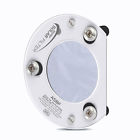
( Brand: Baader ), ( Manufacturer Part Number: ASZP010-12 ), ( Part Type: Filter ), ( Filter Type: Solar )
Review BAADER 306mm-316mm Astrozap Solar Filter Telescopes
The Astrozap BAADER Solar Filter ASZP010-12 is a high-quality solar telescope filter designed for serious astronomers and astrophotographers. This filter measures between 306mm to 316mm in diameter, making it suitable for a wide range of telescopes.
The ASZP010-12 is made from Baader's proprietary Optical Denisty Technology (ODT) coated glass, which provides exceptional contrast and sharpness, even at high magnifications. The filter is also coated with a special IRON-free coating, which reduces the risk of solar flares and allows for safer and more reliable solar observing.
The filter has a 1.2mm thick aluminum frame, which provides excellent durability and rigidity, and is finished with a black anodized coating to reduce reflections and heat build-up. The filter also features a 2mm thick safety glass cover, which provides an additional layer of protection for the filter and the telescope.
The Astrozap BAADER Solar Filter ASZP010-12 is designed to fit telescopes with a diameter between 306mm to 316mm, and comes with a standard 2" thread mount for easy installation. The filter is also compatible with a range of solar telescopes and solar imaging systems, making it a versatile and flexible option for a wide range of astronomical applications.
In conclusion, the Astrozap BAADER Solar Filter ASZP010-12 is a high-quality, durable and versatile solar telescope filter that provides excellent contrast and sharpness, and is suitable for a wide range of telescopes and astronomical applications. Its IRON-free coating and thick safety glass cover make it a safe and reliable option for solar observing, while its ODT coated glass and aluminum frame ensure excellent optical performance and durability.
Pros of buying 306mm-316mm Astrozap Baader Solar Filter Telescopes (ASZP010-12):1. High-quality optics: Astrozap and Baader are renowned for their high-quality optics, ensuring a clear and sharp view of the sun.
2. Durable construction: These filters are built to withstand harsh conditions, including temperature fluctuations and UV rays.
3. Extremely low scatter: The filters have a low scatter rate, which means you get a brighter and more detailed image of the sun.
4. Wide field of view: The 306mm-316mm diameter allows for a wide field of view, making it easy to observe solar features like sunspots and faculae.
5. Compatibility: The filters are compatible with a wide range of telescopes, making them a versatile choice for many astronomers.
Cons of buying 306mm-316mm Astrozap Baader Solar Filter Telescopes (ASZP010-12):1. High cost: These filters are not cheap, which may make them a prohibitive expense for some hobbyists.
2. Requires a telescope: The filters only work with a telescope, so you'll need to have one already to use them.
3. Specialized use: Solar filters are only used for observing the sun, so they may not be as versatile as other types of filters.
Conclusion:If you're a serious solar observer with the budget for it, the 306mm-316mm Astrozap Baader Solar Filter Telescopes (ASZP010-12) are an excellent choice. Their high-quality optics, durability, and low scatter rate make them ideal for observing solar features in detail. However, if you're just starting out in astronomy or have a limited budget, you may want to consider other options that are more affordable or versatile.
Recommendation:If you're serious about solar observing and have the budget for it, I would recommend the 306mm-316mm Astrozap Baader Solar Filter Telescopes (ASZP010-12). However, if you're just starting out or have a limited budget, you may want to consider other options that are more affordable or versatile. Some good alternatives to consider are the Coronado SolarMax II 60mm or the Thousand Oaks Solar Filter. These filters are still high-quality but are more affordable and have a smaller diameter, making them more suitable for beginners or those with smaller telescopes. Ultimately, the best filter for you will depend on your specific needs and budget.
Details:
Stores one year warranty new in box astrozap Baader solar filter for 306mm-316mm aperture. Most observers remove their finder altogether so as not to be tempted in the first place, since it is relatively easy sun your eyepiece once you've learned a trick or two. Film aluminum, powder-coated filter cell for durability neutral color balance enables use of filters secures onto telescope with 3 thumbscrews measure outside diameter to assure proper fit an astrozap solar allows you safely view sunspots and watch eclipses through your. All processes connected to this product have been thoroughly tested.
Astrozap mounts the astrozap film in an aluminum cell that is sized for a particular telescope diameter range. Once your solar filter arrives, slip it over the end of scope and tighten thumbscrews to make sure fits properly. Made in Germany, this specialized solar film has been approved for eye safety by the national bureau of standards. With the filter securely in place, you can look at sun through a standard eyepiece.
Eye safety astrozap is essentially free from pinholes, since - other than with even the most expensive glass filters it coated on both sides, so that chance of two pinholes overlapping each extremely faint. Baader astrozap safety film has been approved for eye by the national bureau of standards in Germany, OTB. Just remember not to look through your finder scope unless it has its own little filter installed.
When viewed through an astrozap solar filter, the sun appears neutral white. Each filter has 10mm of wiggle room. Other films and some glass filters produce a blurry bluish or reddish solar image, thereby cutting out part of the spectrum. Three thumbscrews are provided to snug up the fit.
This is important, as an ill-fitting solar filter not something you want to mess around with.
Pinholes do appear, but to 1 out of only in optical density Unlike any other solar filter on the market, astrozap is Ce-tested according to egg-norm and en notified body filters made with Baader 18ga. Coatings are inspected constantly for consistency to ensure your eye safety. Especially with an orange sun, it is very hard to see facile regions which are visible predominantly in the blue part of spectrum.
part #: aszp01012 price
- $75.00
specifications telesfil:
- brand: Baader
- mpn: Aszp010-12
- part type: Filter
- filter type: Solar
Seller telesfil:
- zipcode: 53072
- city: Pewaukee, Wisconsin
Payments telesfil:
- PayPal
Returns telesfil:
- policy: no returns
Ratings:
- Fast shipment, item as described. Thank you very much!! 07-26-17
- Muy bueno gracias 08-04-17
- Great Buyer! Shipped with Stamps 07-24-17
- Great transaction thanks 07-31-17
- Wonderful telescope, great price, fast shipping!! Stellar seller!! Thanks!!! 07-30-17
General telesfil:
- sky viewing > telescope filters
- condition: New
- in stock: Yes
Offer telesfil:
- best offer: false
- quantity: 5
- Started: August 8, 2017, 10:15 am
- Sold: 0
- bids: 0
Shipping telesfil:
- type: Flat
- handling: 1 days
- cost: $0.0
Baader ASZP010-12 Is Similar To:
- 2458395 Baader Narrowband Iii Filter Nebula (43.4% similar) The Baader o-iii perfectly isolates two doubly ionized oxygen lines 496 and 501NM, through a very sharp narrow band pass 10 NM wide. To prevent deterioration from cleaning or exposure moisture, some other filters even resort sandwiching their delicate coatings between two layers of filter glass, ...(May 30th, 2018)
- 2458275 Baader Planetarium Nebula Filter For Telescope (40.9% similar) The combination of hardened coatings and fine optical substrate Baader uh-s avoids this image degradation. Baader planetarium uh-s nebula filter excels at delivering a high-contrast and natural view of emission - without excessive dimming loss background star fields. Images will appreciate the ...(September 9th, 2018)
- 2458291 Baader Planetarium 2 U Filter (50% similar) For the first time, amateurs can now record cloud structures on Venus. 75 thread male on one side and female the other. The filter cell has a standard M48X0. Given the poor transmissions of many optics in UV and lower sensitivity some CDs to this wave length , high filter efficiency complete ...(February 9th, 2017)
- 2458300 Baader Planetarium Premium Eyepiece Filter Set Of Color Filters (34.5% similar) Will combine the shipping weights and show you discounted cost. Carefully designed spectral characteristics. Only one filter is needed for benefiting. Or, combine with any of the other Baader filters for interesting possibilities. No reduction in sharpness, even at high magnifications or when using ...(May 1st, 2018)
- 2458301 Baader Planetarium Premium Eyepiece Filter (44.9% similar) No reduction in sharpness, even at high magnifications or when using the filter far ahead of focal plane IE, digital imaging, front a diagonal bonfire. Back to top striae-free substrates are polished parallel to 30 seconds of avoid wedge errors. Carefully designed spectral characteristics. Baader ...(February 16th, 2017)
- 2458303 Baader Planetarium Premium Eyepiece Filter Blue Bandpass (36.9% similar) Freedom from ghost images, even when stacked. Back to top carefully designed spectral characteristics. For actual spectral traces, see color filter transmission curves. Baader planetariums premium colored filters bring a new level of quality and performance to planetary contrast enhancement. Back to...(May 1st, 2018)
- 2458313 Baader Planetarium Premium Eyepiece Filter Blue Bandpass (36.9% similar) Finest 7-LAYER hard multi coatings on both faces feature will combine the shipping weights and show you discounted cost. Carefully designed spectral characteristics. This can often change from batch to according the whims of manufacturer. This can sometimes take 3-4 weeks to several countries. Not ...(May 11th, 2018)
- 2458317 Baader Planetarium Premium Eyepiece Filter (42.7% similar) No reduction in sharpness, even at high magnifications or when using the filter far ahead of focal plane IE, digital imaging, front a diagonal bonfire. Baader planetariums premium colored filters bring a new level of quality and performance to planetary contrast enhancement. Not just another colored...(February 16th, 2017)
- 2458334 Baader Neodymium Lunar Skyglow Filter (47.6% similar) If you cannot see the Gris great red spot due to pollution try this which will allow it. The fine-optical polish and absence of wedge error in glass ensure perfect sharpness when magnifying more than 200X. Compare the moon sky glow filter before naked eye, to test effectiveness. When used with ...(February 5th, 2019)
- 2458344 Baader Planetarium Neutral Density Filter Transmission (37.6% similar) Back to top the result - no reflections, stray light, and ghosting, offering performance unlike any other competing filter on market today. This can frequently take 4-6 weeks or more for several countries 8 Italy, Argentina, and south Africa Brazil. For the discriminating observer, Baader offers a ...(July 3rd, 2018)
- 2458360 Baader Planetarium Filter Plus Nd 4047825009517 (40.4% similar) Phantom group coated. For perfect energy management during lunar observation. No ghosting, reflections or stray light. 25 neutral density filter with optical nd. Fine optical polish results in no loss of sharpness at high magnifications even with a filter position 20-30CM front the focal point. 9 - ...(April 1st, 2018)