AGENA ASTROPRODUCTS OFIL-AG-2FIL-12 Planetary Telescope Filter
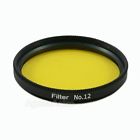
( Brand: Agena Astroproducts ), ( Manufacturer Part Number: OFIL-AG-2FIL-12 ), ( Part Type: Filter )
Review AGENA ASTROPRODUCTS Color planetary Telescope Filter Yellow
The OFIL-AG-2FIL-12 Agena Color Planetary Telescope Filter, manufactured by Astroproducts, is a must-have accessory for any serious astronomer. This high-quality filter is specifically designed for use with 12mm eyepieces, providing an exceptional viewing experience of planets and other celestial bodies.
The OFIL-AG-2FIL-12 is a dual-band filter, offering both a broadband and a narrowband filter in one. The broadband filter enhances the natural color contrast of planets, making details such as cloud belts and storms on Jupiter, and the reddish hue of Mars' surface, more pronounced. The narrowband filter, on the other hand, allows for the observation of specific emission lines in nebulae and other deep-sky objects, such as the H line in the Orion Nebula.
The filter is made of high-density optical glass, ensuring clarity and sharpness of images. It has a 1.25" diameter, making it compatible with a wide range of telescopes and eyepieces. The OFIL-AG-2FIL-12 is also coated with an anti-reflection material, reducing light loss and ensuring maximum transmission of light.
The filter is easy to use and install, with a screw-on design that securely attaches to the eyepiece. It comes with a protective cap to keep it clean and free from dust and debris when not in use.
In summary, the OFIL-AG-2FIL-12 Agena Color Planetary Telescope Filter by Astroproducts is a versatile and high-performing filter that will enhance your astronomical observations, providing a more detailed and colorful view of celestial bodies. Whether you're a beginner or an experienced astronomer, this filter is a valuable addition to your telescope setup.
Pros of buying OFIL-AG-2FIL-12 Agena Color Planetary Telescope Filter 12 by Astroproducts:1. Enhances color contrast: This filter is designed to enhance the color contrast of planets, making them appear more vibrant and detailed in your telescope view.
2. Wide field of view: The 12mm thickness of the filter allows for a wider field of view, allowing you to see more of the planet at once.
3. Durable and scratch-resistant: The filter is made of high-quality optical glass that is both durable and scratch-resistant, ensuring that it will last for many observations.
4. Improves image quality: By blocking out certain wavelengths of light, the filter can help to improve the overall image quality of your telescope, making for a clearer and sharper view.
Cons of buying OFIL-AG-2FIL-12 Agena Color Planetary Telescope Filter 12 by Astroproducts:1. Limited use: The filter is specifically designed for planetary observation, and may not be as effective for other types of astronomy.
2. May reduce brightness: By blocking out certain wavelengths of light, the filter may also reduce the overall brightness of the object you are observing, making it more difficult to see in low light conditions.
3. Higher cost: Compared to other filters, the OFIL-AG-2FIL-12 may be more expensive, which may be a consideration for some budget-conscious astronomers.
Conclusion:If you are an experienced astronomer looking to enhance the color contrast and detail of your planetary observations, the OFIL-AG-2FIL-12 Agena Color Planetary Telescope Filter 12 by Astroproducts may be a worthwhile investment. Its high-quality materials and wide field of view make it a durable and effective tool for planetary observation. However, its limited use and potential to reduce brightness may be a drawback for some. Ultimately, the decision to purchase this filter will depend on your specific needs and budget as an astronomer.
Recommendation:If you are interested in purchasing the OFIL-AG-2FIL-12 Agena Color Planetary Telescope Filter 12 by Astroproducts, I would recommend doing your research and reading reviews to ensure that it is the right filter for your telescope and observing needs. Additionally, be prepared to invest in a higher-cost filter, as this is a premium product designed for serious astronomers. Overall, if you are looking to take your planetary observation to the next level, the OFIL-AG-2FIL-12 is a worthy consideration.
Details:
Back to top 3.
Like the other yellow-tinged filters, it improves detail in larger telescopes Uranus and Neptune while with Venus reveals otherwise low-contrast features.
The yellow filter contrasts strongly with blue-colored features on Jupiter and Saturn, thus enhancing red orange of belts zones.
Back to top 5. Color filters can be very useful for enhancing your views of the moon and planets.
Agendas 2 color planetary filters are manufactured from the purest optical glass and dyed-in-the-mass not simply coated for premium performance. This can sometimes take 3-4 weeks to several countries.
It sharpens boundaries of yellow dust clouds and the blue in martian atmosphere is thus a favorite for viewing red planet. 75 on opposite sides, so multiple filters can be stacked to achieve selective filtration of the visual color spectrum.
Each filter cell has a male and female 2 thread m48x0.
The right filter can make all difference between seeing several small craters in floor of claviers on moon or not five six swirls Jupiter's belts inner crepe ring Saturn.
Depending on the atmospheric conditions, telescope being used, observers experience, and planet observed or photographed, advantages of color filters can be anywhere from subtle to dramatic.
Back to top 4.
This can frequently take 4-6 weeks or more for several countries 8 Italy, Argentina, and south Africa Brazil. Will combine the shipping weights and show you discounted cost.
These are not included in the item price or shipping cost.
It darkens atmospheric currents containing low-hue blue tones and may be used for studies of the polar regions on these planets. The 12 yellow filter increases contrast of blue and green areas on mars, thus darkening maria, oases canal markings, while lightening orange-hued desert regions.
This can often change from batch to according the whims of manufacturer.
The clear aperture is 43mm and each filter comes in a protective plastic storage case. They thread into the barrels of virtually any 2 telescope eyepiece.
part #: ofilag2fil12 price
- $23.30
specifications telesfil:
- brand: Agena Astroproducts
- mpn: Ofil-ag-2fil-12
- part type: Filter
Offer telesfil:
- Started: December 1, 2017, 3:52 pm
- quantity: 2
- bids: 0
- Sold: 0
- best offer: false
Seller telesfil:
- zipcode: 90723
- city: Paramount, California
General telesfil:
- condition: New
- sky viewing > telescope filters
- in stock: Yes
Returns telesfil:
- type: Money Back
- details: Please see the Customer Service section of the listing for our return/exchange policy.
- time: 30 Days
- paid by: Buyer
- policy: returns accepted
Shipping telesfil:
- type: Calculated
- cost: $2.77
- handling: days
Ratings:
- Arrived in good and good order. 12-01-17
- MUCHAS GRACIAS.EXCELENTE PRODUCTO.GRAN VENDEDOR 11-30-17
- Delivered as listed with quick delivery to Canada! Would buy from Again!! 12-01-17
- will try them. 12-01-17
- Great Find! 12-01-17
Payments telesfil:
- PayPal
Agena Astroproducts OFIL-AG-2FIL-12 Is Similar To:
- Ofil-ag-2fil-21 Agena Astroproducts 2 Color (87.5% similar) The 21 orange filter reduces or blocks transmission of blue and green wave length s. They thread into the barrels of virtually any 2 telescope eyepiece. The clear aperture is 43MM and each filter comes in a protective plastic storage case. This can sometimes take 3-4 weeks to several countries. ...(December 1st, 2017)
- Ofil-ag-2fil-23a Agena Astroproducts 2 Color (86.6% similar) Color filters can be very useful for enhancing your views of the moon and planets. This can sometimes take 3-4 weeks to several countries. This can frequently take 4-6 weeks or more for several countries 8 Italy, Argentina, and south Africa Brazil. 75 on opposite sides, so multiple filters can be ...(November 28th, 2017)
- Ofil-ag-2fil-38a Agena Astroproducts 2 Color (84.5% similar) 75 on opposite sides, so multiple filters can be stacked to achieve selective filtration of the visual color spectrum. The filter works well on martian surface phenomena like dust storms, and is very useful during violet clearing for polar caps. This is a good one to use on Venus, the low ...(December 1st, 2017)
- Ofil-ag-2fil-47 Agena Astroproducts Color Planetary Filter For Telescope Violet (71.2% similar) This can often change from batch to according the whims of manufacturer. Back to top they thread into the barrels of virtually any 2 telescope eyepiece. It also helps to view the ring-structure of Saturn. Will combine the shipping weights and show you discounted cost. The right filter can make all ...(July 25th, 2018)
- Ofil-ag-2fil-56 Agena Astroproducts 2 Color (85.4% similar) This can often change from batch to according the whims of manufacturer. The right filter can make all difference between seeing several small craters in floor of claviers on moon or not five six swirls Jupiter's belts inner crepe ring Saturn. Back to top the 56 green filter is marvelous for ...(December 1st, 2017)
- Ofil-ag-2fil-8 Agena Astroproducts 2 Color (86.3% similar) These are not included in the item price or shipping cost. Will combine the shipping weights and show you discounted cost. They thread into the barrels of virtually any 2 telescope eyepiece. Color filters can be very useful for enhancing your views of the moon and planets. Agendas 2 color planetary ...(November 28th, 2017)
- Ofil-ag-2fil-80a Agena Astroproducts Color Planetary Filter For Telescope Medium Blue (68.1% similar) Back to top they thread into the barrels of virtually any 2 telescope eyepiece. 75 on opposite sides, so multiple filters can be stacked to achieve selective filtration of the visual color spectrum. Back to top back to top the blue filter also brings out gas tails of comets. Each filter cell has a ...(July 25th, 2018)
- Ofil-ag-2fil-82a Agena Astroproducts Color Planetary Filter For Telescope Light Blue (70.1% similar) Also, try this one to split binaries. These are not included in the item price or shipping cost. They thread into the barrels of virtually any 2 telescope eyepiece. This can often change from batch to according the whims of manufacturer. Each filter cell has a male and female 2 thread M48X0. 75 on ...(July 25th, 2018)